
Warehouse floors must withstand rigorous daily use. Between heavy pallet storage, forklifts running all day, and constant loading and unloading, the concrete slab beneath your operation carries enormous weight. When a section of the floor starts shifting or wobbling under pressure, it’s often a sign that the slab no longer has solid support underneath.
This issue is commonly referred to as a rocking slab. While the movement may seem minor at first, it can gradually worsen and create both operational and safety concerns inside the warehouse.
Understanding what causes this problem and how it can be repaired helps facility managers keep their buildings safe and functional.
What a Rocking Slab Means for Your Warehouse Floor
Concrete slabs are designed to sit evenly on compacted soil or base material. When the ground beneath part of the slab settles, erodes, or shifts, the concrete can become partially unsupported.
Instead of staying firmly in place, that section of the slab may pivot slightly when weight passes over it. Forklifts, pallet jacks, or even foot traffic can cause the concrete to move because the slab is no longer resting on stable ground.
This movement is often more noticeable in high-traffic areas of a warehouse.
Signs Your Warehouse Floor May Be Losing Support
Rocking slabs rarely appear overnight. The problem usually develops gradually as the soil beneath the building changes.
You might notice:
-
Sections of the floor that shift when equipment drives across them
-
A hollow sound when tapping certain areas of concrete
-
Small vertical movement between neighboring slabs
-
Cracking along joints or slab edges
-
Forklifts vibrating when crossing a particular spot
These warning signs usually indicate that empty space has formed beneath the concrete floor.
Conditions That Contribute to Slab Movement in Florida
Florida’s climate and soil conditions make warehouses especially susceptible to voids forming beneath concrete floors.
Loose or Sandy Soil
Many parts of Florida are built on sandy ground that can easily compact or move over time. As the soil shifts, it can leave portions of the slab unsupported.
Water Movement Beneath the Building
Heavy rainfall, plumbing leaks, or poor drainage may allow water to carry soil away from beneath the slab. This process slowly creates voids beneath the concrete.
Continuous Heavy Loads
Warehouse floors support significant weight from shelving systems and forklifts. Repeated pressure can gradually compress the soil base under the slab.
Settlement Over Time
Even properly constructed slabs may settle slightly over the years as the building and soil adjust to long-term loads.
The Risks of Leaving the Problem Unrepaired
Allowing a rocking slab to continue moving can cause damage to both the floor and daily operations.
Potential issues include:
-
Concrete cracking or breaking apart
-
Increased wear on forklifts and warehouse equipment
-
Uneven travel paths for pallet movement
-
Safety concerns for employees working in the facility
-
Higher repair costs if the problem spreads
Addressing the issue early can help prevent larger structural repairs later.
How Slabjacking Restores Concrete Support
Replacing a warehouse slab is expensive and time-consuming. Fortunately, many rocking slabs can be corrected without demolition.
Slabjacking is a repair method that restores the support beneath the concrete floor.
During this process, technicians inject a stabilizing material beneath the slab. The material fills any empty spaces and strengthens the base supporting the concrete.
Typical Steps in the Process
- Small injection points are drilled into the affected slab.
- Stabilizing material is pumped below the concrete.
- The material spreads beneath the slab and fills voids.
- As the space is filled, the slab becomes level and stable again.
Once the slab is properly supported, the unwanted movement stops.
Why Many Warehouses Choose Slabjacking
For commercial and industrial properties, slabjacking provides several advantages compared to full floor replacement.
Facility owners often choose this repair because it:
-
Eliminates the need to remove large sections of concrete
-
Reduces repair costs significantly
-
Allows most warehouses to continue operating during repairs
-
Stabilizes the floor for long-term performance
-
Can often be completed quickly
This makes it an efficient solution for high-traffic warehouse environments.
Stabilize Your Warehouse Floor with Sealtite Slabjacking
If you’ve noticed sections of your warehouse floor shifting or moving under heavy traffic, it may be time to address the underlying support issue.
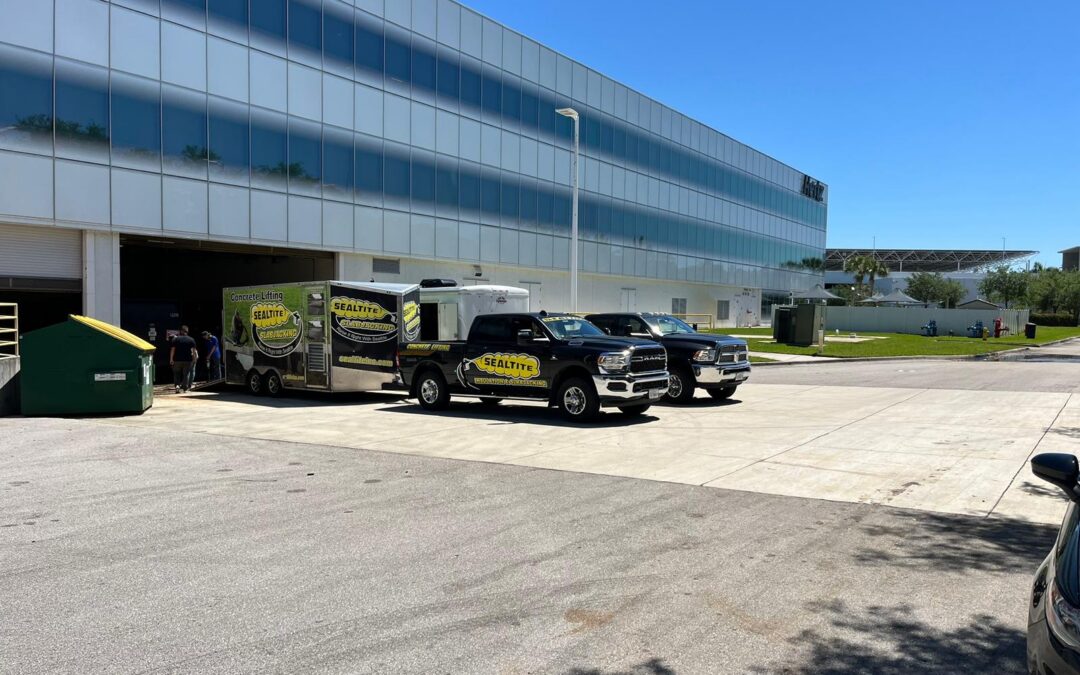
Sealtite Slabjacking provides professional concrete lifting and stabilization services for warehouses and commercial buildings throughout Florida. Our team works to fill voids beneath concrete slabs and restore the solid support your facility needs.
Get Your Warehouse Floor Stabilized Today
Unstable concrete floors can affect both safety and productivity. Repairing the issue early helps prevent larger structural problems in the future.
📞 Call Sealtite Slabjacking at (239) 770-4080 or get your free estimate today to schedule a professional evaluation and restore stability to your warehouse concrete.