
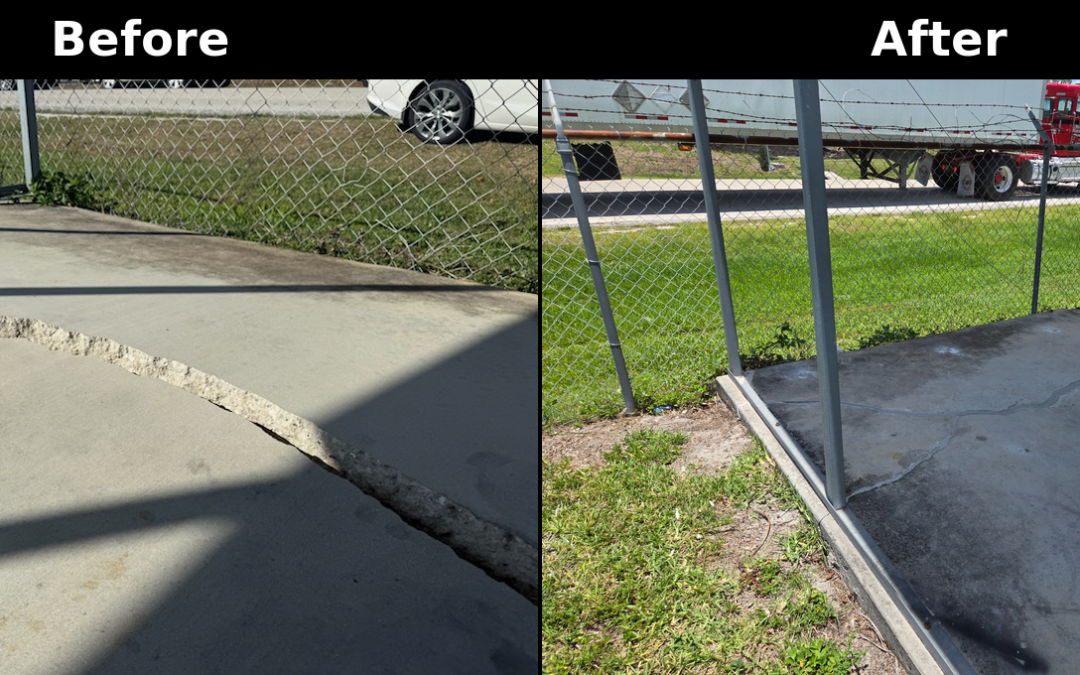
A cracked or sunken concrete slab can quickly change the appearance and safety of your Florida property. Uneven sections may create trip hazards, collect standing water or make your driveway, sidewalk, patio or pool deck difficult to use.
Before you go and schedule a complete concrete replacement, contact Sealtite Slabjacking for a free estimate. We help homeowners in Fort Myers, Naples, Cape Coral and surrounding Southwest Florida communities lift and stabilize sunken concrete using polyurethane foam. Our qualifying slabjacking work is also backed by a lifetime warranty.
A 60-Second Concrete Check
Walk around the affected area and look for these common warning signs:
- One concrete section sits lower than the adjoining slab.
- A crack has developed where the concrete is settling.
- Water collects in a low spot after heavy rain.
- The slab slopes toward your home or another structure.
- A gap has formed beneath the edge of the concrete.
- The surface rocks, shifts or feels unsupported.
- A sidewalk, driveway or pool deck has become a trip hazard.
These symptoms may indicate that the soil beneath the slab is no longer providing even support.
Why Concrete Sinks in Florida
Florida concrete does not face the same freeze-thaw conditions found in northern states, but it has its own challenges. Sandy soil, intense rainfall and water movement can gradually create empty spaces beneath a slab.
Heavy rain washes away supporting soil
Florida storms can send large amounts of water through the soil in a short period. If drainage is poor, water may carry soil away from beneath the concrete.
Sandy soil shifts easily
Sandy soil drains quickly, but it can also move or settle. As the soil changes, sections of concrete may lose support and begin sinking.
Irrigation systems contribute to erosion
Broken sprinkler lines, overwatering and repeated runoff can saturate the ground near a driveway, walkway or pool deck. Over time, this may weaken the slab’s base.
Construction fill settles
If the soil beneath the concrete was not properly compacted during construction, it may continue settling after the slab is installed.
Tropical weather makes small problems worse
Heavy rain and tropical storms can accelerate existing soil loss. A minor low spot may become more noticeable when additional water reaches the area beneath the slab.
What Does the Crack Tell You?
Not every crack means the concrete must be replaced.
A narrow crack with uneven sides: One portion of the slab may be settling lower than the other. Lifting the sunken section could improve the alignment.
A crack near a low corner: The corner may have lost support because of erosion or soil movement.
Several cracks with severe crumbling: The concrete itself may be too deteriorated for lifting, making replacement a more appropriate option.
A crack that repeatedly collects water: The slab’s slope may be directing water into the damaged area and contributing to continued settlement.
Slabjacking does not erase an existing crack. Its purpose is to address the settlement beneath the concrete, lift the slab when possible and improve its support. After lifting, the crack may still remain visible and may require sealing.
How Sealtite’s Slabjacking Process Works
Instead of removing the existing concrete, Sealtite works from beneath it.
- Evaluate the slab: Our team examines the settlement, cracks, drainage and overall concrete condition.
- Drill small injection holes: Small holes are placed strategically in the affected concrete.
- Inject polyurethane foam: The material flows beneath the slab and fills underlying voids.
- Lift the concrete: As the foam expands, it carefully raises the sunken section.
- Seal the injection points: The small holes are patched after the lift is completed.
This process can often restore usable concrete with less demolition and disruption than full replacement.
Is Your Concrete a Good Candidate?
Slabjacking may be an option when:
- The slab is sunken but mostly intact.
- One section is lower than the surrounding concrete.
- Voids have formed beneath the slab.
- The concrete creates a trip hazard or drainage problem.
- The surface is strong enough to be lifted.
Replacement may be necessary when the concrete is badly crumbled, severely deteriorated or broken into numerous unstable pieces. A professional inspection is the best way to determine which solution fits your property.
Common Florida Areas We Lift
Polyurethane slabjacking can be used for many residential concrete surfaces, including:
- Driveways
- Sidewalks
- Walkways
- Pool decks
- Patios
- Garage floors
- Concrete steps
- Porches
- Lanai slabs
Because every slab settles differently, Sealtite provides a project-specific evaluation rather than treating concrete repair as a one-size-fits-all service.
Frequently Asked Questions
Can you lift concrete that is already cracked?
Possibly. If the concrete remains strong enough to lift, slabjacking may improve the height and alignment of the settled sections. The existing crack will not disappear, but it may be easier to seal after the slab is stabilized.
How much does slabjacking cost in Florida?
Cost depends on the size of the slab, the amount of settlement, accessibility and the number of voids beneath the concrete. Sealtite offers free estimates so you can receive pricing based on your specific project.
Is slabjacking only for driveways?
No. It may be used for sidewalks, patios, pool decks, walkways, steps and other settled concrete surfaces.
Does Sealtite offer a warranty?
Yes. Sealtite offers a lifetime warranty on qualifying slabjacking work. Our team can review the coverage details during your estimate.
Get a Free Concrete-Lifting Estimate in Southwest Florida
If you have a cracked or sunken concrete slab, addressing it early may help prevent worsening settlement, drainage issues and trip hazards. Sealtite Slabjacking proudly serves homeowners in Fort Myers, Naples, Cape Coral and surrounding Southwest Florida communities.