
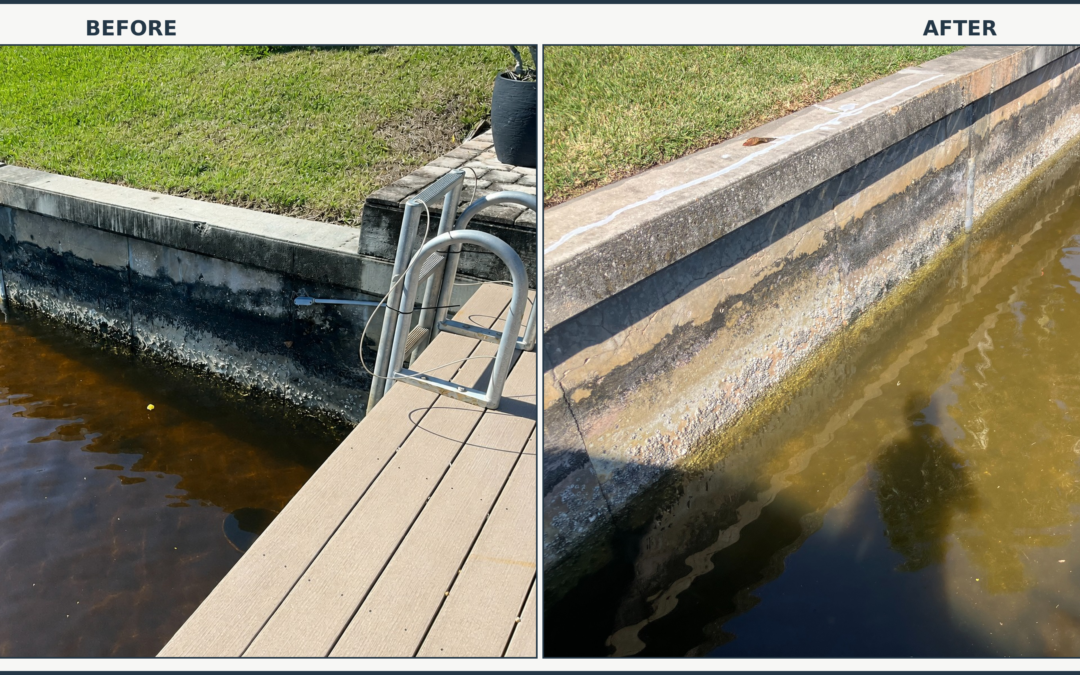
Your seawall safeguards your shoreline and helps hold the surrounding soil in place. Over time, cracks, gaps, and failing joints can allow water to move through the wall. As the water flows in and out, it may carry soil with it and create empty spaces behind the seawall.
This problem is known as soil washout or erosion. It can happen slowly, making the damage difficult to notice until the surrounding ground begins to sink. If left untreated, the problem may threaten nearby patios, walkways, landscaping, docks, and other waterfront structures.
What Causes Soil Washout Behind a Seawall?
Seawalls are continually exposed to water movement, changing water levels, storms, and pressure from the soil behind them. Over time, this stress can create openings that allow soil to escape.
Common causes of seawall washout include:
- Cracks in the seawall
- Open or deteriorating joints
- Gaps around pipes and drainage outlets
- Poor drainage behind the wall
- Changing water levels
- Wave action and strong currents
- Heavy rain and stormwater runoff
- Aging or damaged construction materials
Even a small opening can allow water to carry away loose soil. As more material disappears, larger voids may develop behind and beneath the seawall.
Warning Signs of Seawall Erosion
Soil loss is not always visible from the water. Some of the clearest signs may appear on the land behind the seawall.
Watch for:
- Sunken or uneven ground near the shoreline
- Small holes or depressions behind the wall
- Cracks in nearby concrete
- Settling patios, walkways, or pool decks
- Separating seawall joints
- Water flowing through cracks or openings
- Loose or unstable soil
- Gaps beneath concrete slabs
- Areas that continue to settle after being filled
If you notice one or more of these warning signs, have the area inspected as soon as possible. Adding topsoil may temporarily hide the damage, but it will not stop the underlying erosion.
Why Filling the Voids Matters
Empty spaces behind a seawall reduce support for the soil and nearby structures. As these voids grow, the ground above them can settle or collapse. Concrete slabs may crack, landscaping may sink, and the seawall may experience additional pressure.
Addressing the problem early can help:
- Stabilize loose or weakened soil
- Fill hidden voids behind the seawall
- Reduce continued soil loss
- Support nearby concrete and structures
- Prevent settlement from becoming more serious
- Extend the useful life of the seawall
How Sealtite Slabjacking Can Help
Sealtite Slabjacking offers professional solutions for filling voids and stabilizing soil behind seawalls. After evaluating the affected area, our team can determine where material has been lost and recommend an appropriate repair plan.
Specialized injection material can be placed in targeted areas to fill empty spaces and improve support behind the seawall. Depending on the condition of the property, the process may also help stabilize nearby concrete that has begun to settle.
Every seawall and waterfront property is different. A professional inspection is the best way to determine the source of the problem and whether void filling or soil stabilization is right for your property.
Do Not Wait for the Damage to Spread
Seawall erosion rarely corrects itself. The longer water continues to wash soil away, the larger the hidden voids may become. Early attention can help protect your shoreline and reduce the risk of more extensive damage.
Schedule Your Free Estimate Today
If you suspect water is washing away the soil behind your seawall, contact Sealtite Slabjacking today. Our team will inspect the affected area, explain the available repair options, and provide a free estimate.
Qualifying work is also protected by our lifetime warranty, giving you added confidence in your seawall repair. Ask our team for complete warranty terms, eligibility, and coverage details.
Call Sealtite Slabjacking today to schedule your free estimate and help protect your waterfront property for years to come.