
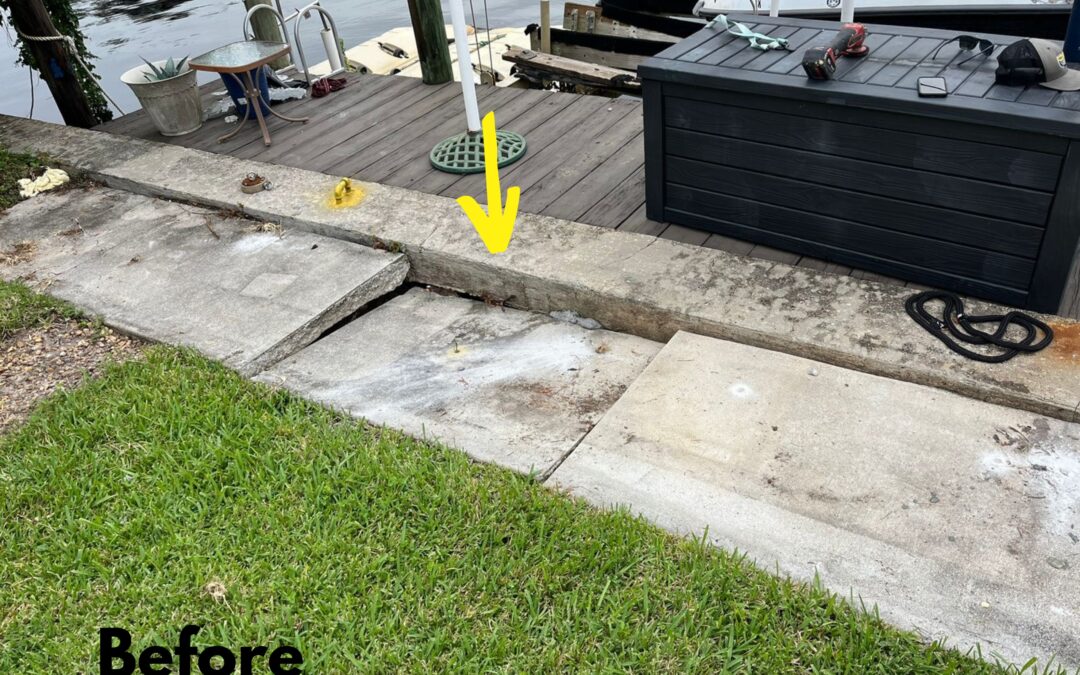
Sunken driveways, uneven sidewalks, and settled pool decks are common concerns for Florida homeowners. At Sealtite Slabjacking, we use polyurethane foam to lift and support concrete that has settled, helping homeowners restore usable surfaces without the disruption of removing and replacing the entire slab. Contact Sealtite Slabjacking for a free estimate to find out whether polyurethane concrete lifting is the right solution for your property.
Why Concrete Settles in Florida
Florida’s sandy soil can provide a good base for concrete when properly prepared, but it can also wash away when water moves beneath a slab. Heavy rainfall, poor drainage, and water entering through cracks or open joints can contribute to erosion. As the soil washes away, empty spaces develop beneath the concrete, leaving portions of the slab without adequate support.
Over time, that loss of support can cause concrete to sink or become uneven. Lifting the slab is part of the repair, but addressing the conditions that caused it to settle is also essential to helping the repair last.
Smaller Holes Help Preserve the Surface
Traditional mudjacking uses a heavy slurry pumped beneath the concrete through drilled holes. Those holes are typically about 1 to 1½ inches in diameter. With Sealtite’s polyurethane lifting process, injection holes can be as small as ⅜ of an inch.
Smaller holes mean less concrete is removed during the repair and smaller patches remain afterward. For visible areas such as driveways, walkways, and pool decks, this helps keep the finished repair less noticeable.
Strong Support Without the Added Weight
One of polyurethane foam’s biggest advantages is its combination of strength and low weight. When soil beneath a slab has already settled or eroded, adding a heavy lifting material increases the load on that soil.
The standard polyurethane foam Sealtite uses can support loads of up to 11,000 pounds per square foot. For projects requiring greater strength, a higher-density foam may be an option. Our team evaluates the project to determine the appropriate material and approach.
That strength allows the foam to support the concrete while adding much less weight than a traditional mudjacking mixture.
Water Resistance Matters in Florida
Polyurethane foam is water resistant, making it a practical choice for concrete exposed to Florida’s rainfall and moisture. By filling voids beneath the slab with a water-resistant material, the repair can help reduce opportunities for water to wash soil out of the treated area.
Foam lifting works best alongside proper drainage and maintenance. Sealing joints, directing downspouts away from the concrete, and maintaining backfill along slab edges help limit water intrusion and future erosion. These steps are especially important where sandy soil is easily washed away.
How Polyurethane Concrete Lifting Works
Our installers begin by drilling small injection holes through the concrete. Polyurethane is then injected beneath the slab as a liquid. As the material expands, it fills voids and develops pressure that lifts the settled concrete.
The team monitors the lift and controls the injection to bring the slab toward the desired elevation. The expanded foam remains beneath the concrete, providing support in the treated areas. Once the lifting process is complete, the injection holes are patched, and joint sealing may also be performed.
For concrete that is suitable for lifting, this process allows homeowners to keep their existing slab. It can also avoid the demolition, debris removal, and potential color differences that come with replacing only part of a concrete surface.
A Fast Return to Everyday Use
Polyurethane foam allows the slab to bear weight immediately after lifting. However, the finishing materials may need additional time before the area is ready for normal use.
Sealtite’s concrete hole patches and any joint sealant typically require 24 hours to cure. When those materials are applied, homeowners should wait 24 hours before using the repaired area as directed by our team. We explain the timing for each project so you know when you can walk on your sidewalk, park in your driveway, or use your pool deck again.
A Lifetime Warranty for Qualifying Projects
Most Sealtite Slabjacking projects qualify for our lifetime warranty. Maintaining that coverage requires meeting the project’s warranty criteria, including controlling erosion, keeping joints sealed, directing downspouts away from the concrete, and maintaining proper backfill along slab edges.
If a qualifying slab settles again and the warranty requirements have been met, Sealtite will return to lift it at no charge. Our team will explain eligibility and the maintenance requirements for your project so you understand what is covered.
Schedule Your Free Concrete Lifting Estimate
If your Florida driveway, sidewalk, or pool deck has settled, polyurethane foam may offer a practical way to restore support and improve the surface without replacing the concrete. Its small injection holes, lightweight strength, and water resistance make it well suited to many Florida concrete lifting projects.
Contact Sealtite Slabjacking today to schedule your free estimate. We’ll evaluate your concrete, discuss the conditions contributing to settlement, and explain your repair options and lifetime warranty eligibility.